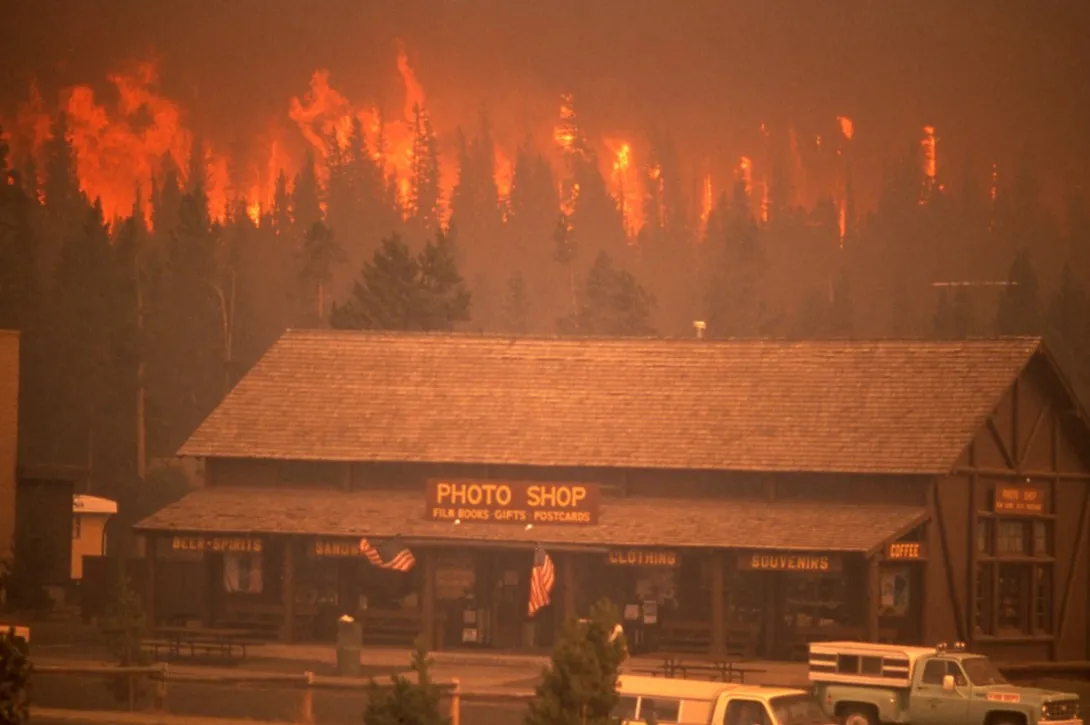
On the evening of September 7, 1988, a wall of flame came at the Old Faithful complex through the crowns of the lodgepole pines, and firefighters stood in the parking lots with hoses, soaking the roofs of the inn and the visitor buildings as the fire stormed past. The buildings were saved. Four days later, on September 11, a quarter of an inch of snow fell, and the great Yellowstone fires of 1988 stopped advancing. By the National Park Service's accounting, fire had affected 793,880 acres of the park, about 36 percent of it, in the largest and most controversial fire season in Yellowstone's history.
The season began reasonably. Yellowstone's fire plan, in place since 1972, treated lightning fire as a natural process and let some fires burn. In June 1988, managers evaluated and allowed 18 lightning-caused fires to burn, and 11 of them simply went out, as fires usually did. Then the weather turned. After a wet spring, almost no measurable rain fell for nearly three months, making the summer of 1988 the driest in the park's recorded history, and dry lightning storms with high winds kept starting fires and pushing them. After July 15, no new natural fires were allowed to burn, and after July 21 every fire in the park was fought with full suppression. It did not matter. Five fires burned into the park from adjacent public lands, and the largest of all, the North Fork Fire, was human-caused, started accidentally outside the park, and burned more than 410,000 acres. More than $120 million was spent fighting fires in the Greater Yellowstone Ecosystem, at that time the largest firefighting effort in United States history, and the firefighters on the ground agreed that only weather could stop them. Weather, in the end, did.
The news coverage that summer settled on a word that the science does not support: destroyed. About 64 percent of the park did not burn at all, and most of what burned did so in a mosaic of scorched, singed, and untouched ground. Post-fire research found that heat lethal to deep roots occurred in less than 0.1 percent of the park. Most burned plants had been top-killed but were alive at the root, regrowth began within days where water was available, and relatively few animals died. No major developed area was lost. Nor is it accurate to blame a "let-burn policy" as the sole cause: full suppression was ordered on July 21 and the fires grew anyway, under record drought and wind, with the biggest of them started by a person outside the park's boundary.
The fires did change policy, but not in the direction the headlines predicted. A national review concluded that natural-fire policies in the national parks were basically sound, and its recommendations were incorporated into National Park Service fire policy in 1990 and into Yellowstone's own fire plan in 1992. Fire kept its place in the ecosystem, with stricter attention to conditions.
Visitors today drive through the evidence without always knowing it: whole hillsides of even-aged young lodgepole pines, standing silver snags from 1988 still scattered among them, and meadows richer for the burning. The forests that frightened the nation in 1988 have largely regenerated, cone by cone and seedling by seedling, on the schedule fire set for them long before there was a park to watch it happen.
Photo: Crown fire approaching the Old Faithful complex, September 7, 1988 — photo by Jeff Henry, National Park Service.