Skip to header Skip to main navigation Skip to main content Skip to footer
Home
History of Yellowstone National Park
Stories From the World's First National Park

Main navigation

  • Home
  • Articles
  • Business Directory
  • Dining
  • History
  • Lodging
  • Outdoors
  • Shopping
  • Things to Do
  • Weather
  • Webcams

Article Archive

March 1, 1872: The Day Yellowstone Became the World's First National Park
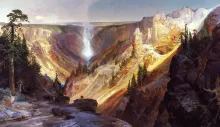
Thomas Moran's 1872 painting of the Grand Canyon of the Yellowstone, the monumental canvas based on his field work with the Hayden survey.

On March 1, 1872, President Ulysses S. Grant signed a short act of Congress, and with that signature some 2.2 million acres at the headwaters of the Yellowstone River became something the world had never seen. The act reserved the land "from settlement, occupancy, or sale under the laws of the United States" and dedicated it "as a public park or pleasuring-ground for the benefit and enjoyment of the people." There was no ceremony, and Grant, who never visited Yellowstone, left no recorded comment on what he had done.
  • Read more about March 1, 1872: The Day Yellowstone Became the World's First National Park

The Army Years: How the Cavalry Saved Yellowstone, 1886-1918

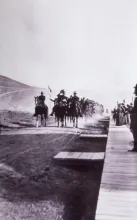
Company M of the First U.S. Cavalry marching into Mammoth Hot Springs in August 1886, at the start of the Army's administration of Yellowstone.

In August 1886, a column of cavalry rode into Mammoth Hot Springs and pitched its tents at the foot of the terraces. Company M of the First U.S. Cavalry, under Captain Moses Harris, had come from Fort Custer in Montana Territory to do what fourteen years of civilian superintendents could not: protect Yellowstone. The camp they called Camp Sheridan was meant to be temporary. The Army stayed for thirty-two years, and in that time it built the post, the patrol system, and the habits of enforcement on which the modern National Park Service still stands.

  • Read more about The Army Years: How the Cavalry Saved Yellowstone, 1886-1918

The Summer of Fire: Yellowstone, 1988

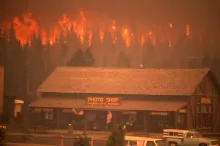
A crown fire racing through the treetops as it approaches the Old Faithful complex on September 7, 1988.

On the evening of September 7, 1988, a wall of flame came at the Old Faithful complex through the crowns of the lodgepole pines, and firefighters stood in the parking lots with hoses, soaking the roofs of the inn and the visitor buildings as the fire stormed past. The buildings were saved. Four days later, on September 11, a quarter of an inch of snow fell, and the great Yellowstone fires of 1988 stopped advancing.

  • Read more about The Summer of Fire: Yellowstone, 1988

John Colter and the Winter Journey No One Believed

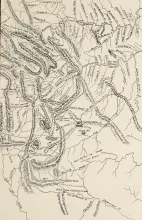
William Clark's map, as printed in 1895, showing the dotted line of Colter's Route in 1807 across the Yellowstone country.

In the autumn of 1807, a trapper named John Colter walked out of a rough stockade at the mouth of the Bighorn River and into the winter, alone. He carried a pack, a rifle, and instructions from the trader Manuel Lisa to find the Native nations of the region and invite them to trade. He came back months later with stories of a country where the ground steamed, springs boiled, and the earth smelled of sulfur. Almost nobody believed him.

  • Read more about John Colter and the Winter Journey No One Believed

The Washburn Expedition of 1870: The Party That Named Old Faithful

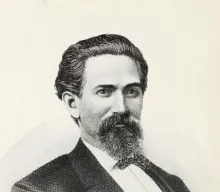
Portrait of Henry D. Washburn, leader of the 1870 Washburn expedition, from the frontispiece of Langford's 1905 diary of the expedition.

In the middle of August 1870, nine citizens of Montana Territory rode out of Helena to see whether the trappers' tales were true. They were not scientists or soldiers by trade. They were lawyers, bankers, merchants, and officials, led by Henry D. Washburn, the Surveyor-General of Montana Territory, and they had talked the Army into coming along. At Fort Ellis, near present-day Bozeman, they collected their escort: Lieutenant Gustavus C. Doane, one sergeant, and four privates of Company F, Second Cavalry, carrying thirty days' rations and a hundred rounds of ammunition per man.

  • Read more about The Washburn Expedition of 1870: The Party That Named Old Faithful

Pictures That Made a Park: Jackson, Moran, and the Hayden Survey of 1871

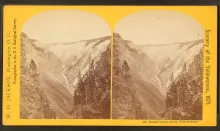
William Henry Jackson's 1871 photograph of the Grand Canyon of the Yellowstone, made during the Hayden Geological Survey.

Yellowstone had a credibility problem. For sixty years, everyone who described it sounded like a liar, and by 1871 the young science of geology decided to settle the matter with evidence. That spring, Congress appropriated $40,000 for Ferdinand V. Hayden's U.S. Geological and Geographical Survey of the Territories to explore the Yellowstone region, and Hayden did something no survey leader had done on this scale before: he took a photographer and a painter along, so that the country could speak for itself.

  • Read more about Pictures That Made a Park: Jackson, Moran, and the Hayden Survey of 1871

Nathaniel P. Langford: A Superintendent Without a Salary

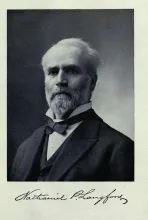
Portrait of Nathaniel P. Langford, Yellowstone's first superintendent, as published in his 1905 history of the park's discovery.

When Yellowstone National Park was created in March 1872, Congress gave it a superintendent and nothing else: no salary, no operating funds, and no staff. The man who accepted that impossible job was Nathaniel P. Langford, a veteran of the Washburn expedition of 1870 and one of the park's most effective public advocates. Secretary of the Interior Columbus Delano appointed him in May 1872, and Langford, who received the notification on May 10, accepted knowing full well that the position paid nothing.

  • Read more about Nathaniel P. Langford: A Superintendent Without a Salary

The Poacher Who Changed the Law: Ed Howell and the Act of 1894

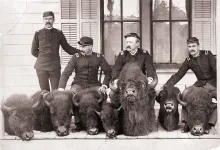
Fort Yellowstone officers posed in 1894 with eight bison heads confiscated from the poacher Ed Howell.

In March 1894, in the deep snow of Pelican Valley, an Army scout named Felix Burgess followed a snowshoe trail to a cache of six bison scalps and skins. Burgess was patrolling alone, on skis, in one of the most remote corners of Yellowstone. He kept following the trail, and near Astringent Creek he came upon the man he was looking for: Edgar Howell of Cooke City, Montana, skinning a freshly killed bison, with five more carcasses lying around him. At least eleven of the park's bison had died on that one poaching trip.

  • Read more about The Poacher Who Changed the Law: Ed Howell and the Act of 1894

The Old Faithful Inn: A Log Palace Beside the Geyser

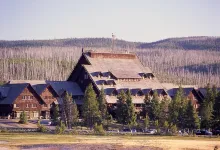
The main facade of the Old Faithful Inn, built in 1904 of lodgepole pine and rhyolite stone beside the Old Faithful geyser.

It was built in a single winter, in a geyser basin, out of the forest that surrounded it. The Old Faithful Inn opened in 1904 a short walk from the world's most famous geyser, and it was like nothing American travelers had ever slept in: a towering log palace with a lobby that soared some six stories to a steeply pitched roof, a stone fireplace built of volcanic rock, and gnarled pine branches for balustrades.

  • Read more about The Old Faithful Inn: A Log Palace Beside the Geyser

The Roosevelt Arch: A Stone Gateway and a Promise

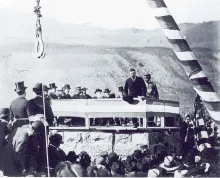
President Theodore Roosevelt speaking at the cornerstone ceremony for the Roosevelt Arch at Gardiner, Montana, on April 24, 1903.

Every national park needs a front door, and in 1903 Yellowstone built one out of stone. The Roosevelt Arch rises about 52 feet over the road at Gardiner, Montana, where the five-mile drive to headquarters at Mammoth Hot Springs begins. Across its top, in letters meant to be read from a wagon or a train platform, runs a promise: "For the Benefit and Enjoyment of the People." Those words are a quotation, and getting their source right matters.

  • Read more about The Roosevelt Arch: A Stone Gateway and a Promise

Pagination

  • Current page 1
  • Page 2
  • Next page ››
  • Last page Last »

Yellowstone Weather — Mammoth Hot Springs

Loading current conditions...

Loading forecast...

Upcoming Events

Yellowstone Events Calendar

This week in Yellowstone:

  • See the park calendar for current programs and any scheduled events.

Copyright © 2026 Rocky Mountain Madman LLC - All rights reserved

Developed and Designed by Rocky Mountain Madman LLC